107 Atom Frequency Čerstvý
107 Atom Frequency Čerstvý. E=hf where h=3.99×10⁻¹³kjsmol is planck's constant, in units consistent with our earlier choice. The electrons are in discrete resonances, where energy has to be either added or removed in fixed steps.

Nejlepší Quantum Light And Matter Spectroscopy Durham University
Unfortunately, the bohr model of the atom only worked for the hydrogen atom. 09/01/2017 · this change in the energy of the atom equals the energy carried off by the photon that is released. This change in the energy of the atom equals the energy carried off by the photon that is released. Atomic clocks have revolutionized navigation. To find the frequency of this emission line use the planck expression:It is often referred to as orbitals or orbital level.
∴ f = 0.1816 ×10⁻¹⁸ 6.626 ×10−34 = 2.74 ×10¹⁴ s−1. E=hf where h=3.99×10⁻¹³kjsmol is planck's constant, in units consistent with our earlier choice. Only time will tell us its future applications. Even if we don't completely understand what time is, we can precisely measure what time it is, thanks to the atomic clock, humankind's most accurate measurement device. The frequency of its rotational motion is the number of times it will rotate around the proton in one second, and it … To convert to frequency , we apply planck's relation:

∴ f = 0.1816 ×10⁻¹⁸ 6.626 ×10−34 = 2.74 ×10¹⁴ s−1.. The electrons are in discrete resonances, where energy has to be either added or removed in fixed steps. ∴ f = 0.1816 ×10⁻¹⁸ 6.626 ×10−34 = 2.74 ×10¹⁴ s−1. The nucleus also has resonances, but they. It is often referred to as orbitals or orbital level. The frequency of its rotational motion is the number of times it will rotate around the proton in one second, and it …. The electrons are in discrete resonances, where energy has to be either added or removed in fixed steps.

These frequencies can be analyzed to identify the element.. For the electron in the first bohr orbit in the hydrogen atom: The frequency of its rotational motion is the number of times it will rotate around the proton in one second, and it … Atomic clocks have revolutionized navigation. ∴ f = e h... 05/07/2016 · δe = 2.18 × 10181 9 − 1 36 δe = 0.1816 ×10⁻¹⁸ j.

Atomic clocks have revolutionized navigation.. 09/01/2017 · this change in the energy of the atom equals the energy carried off by the photon that is released. The frequency of its rotational motion is the number of times it will rotate around the proton in one second, and it … The electrons are in discrete resonances, where energy has to be either added or removed in fixed steps. The nucleus also has resonances, but they. For the electron in the first bohr orbit in the hydrogen atom: Unfortunately, the bohr model of the atom only worked for the hydrogen atom... Atomic clocks have revolutionized navigation.

To convert to frequency, we apply planck's relation: ∴ f = 0.1816 ×10⁻¹⁸ 6.626 ×10−34 = 2.74 ×10¹⁴ s−1. To convert to frequency, we apply planck's relation: 09/01/2017 · this change in the energy of the atom equals the energy carried off by the photon that is released.. Only time will tell us its future applications.

05/07/2016 · δe = 2.18 × 10181 9 − 1 36 δe = 0.1816 ×10⁻¹⁸ j. The nucleus also has resonances, but they. The electrons are in discrete resonances, where energy has to be either added or removed in fixed steps. Only time will tell us its future applications. This change in the energy of the atom equals the energy carried off by the photon that is released. 09/01/2017 · this change in the energy of the atom equals the energy carried off by the photon that is released.. For the electron in the first bohr orbit in the hydrogen atom:

Atomic clocks have revolutionized navigation. E=hf where h=3.99×10⁻¹³kjsmol is planck's constant, in units consistent with our earlier choice. The nucleus also has resonances, but they. Unfortunately, the bohr model of the atom only worked for the hydrogen atom. To convert to frequency , we apply planck's relation: For the electron in the first bohr orbit in the hydrogen atom: It is often referred to as orbitals or orbital level. This change in the energy of the atom equals the energy carried off by the photon that is released. To convert to frequency , we apply planck's relation:

It is often referred to as orbitals or orbital level.. Atomic clocks have revolutionized navigation. E=hf where h=3.99×10⁻¹³kjsmol is planck's constant, in units consistent with our earlier choice. 09/01/2017 · this change in the energy of the atom equals the energy carried off by the photon that is released. Unfortunately, the bohr model of the atom only worked for the hydrogen atom. ∴ f = e h. It is often referred to as orbitals or orbital level. To find the frequency of this emission line use the planck expression: 12/07/2021 · how do you find the frequency of an atom? For the electron in the first bohr orbit in the hydrogen atom: Atomic clocks have revolutionized navigation.

E=hf where h=3.99×10⁻¹³kjsmol is planck's constant, in units consistent with our earlier choice. .. 12/07/2021 · how do you find the frequency of an atom?

E=hf where h=3.99×10⁻¹³kjsmol is planck's constant, in units consistent with our earlier choice. ∴ f = 0.1816 ×10⁻¹⁸ 6.626 ×10−34 = 2.74 ×10¹⁴ s−1. Only time will tell us its future applications... 09/01/2017 · this change in the energy of the atom equals the energy carried off by the photon that is released.

These frequencies can be analyzed to identify the element... 12/07/2021 · how do you find the frequency of an atom? This change in the energy of the atom equals the energy carried off by the photon that is released. To convert to frequency, we apply planck's relation: Unfortunately, the bohr model of the atom only worked for the hydrogen atom. ∴ f = 0.1816 ×10⁻¹⁸ 6.626 ×10−34 = 2.74 ×10¹⁴ s−1.

To find the frequency of this emission line use the planck expression: To convert to frequency , we apply planck's relation: 05/07/2016 · δe = 2.18 × 10181 9 − 1 36 δe = 0.1816 ×10⁻¹⁸ j. Atomic clocks have revolutionized navigation. These frequencies can be analyzed to identify the element. It is often referred to as orbitals or orbital level. ∴ f = 0.1816 ×10⁻¹⁸ 6.626 ×10−34 = 2.74 ×10¹⁴ s−1. For the electron in the first bohr orbit in the hydrogen atom: E=hf where h=3.99×10⁻¹³kjsmol is planck's constant, in units consistent with our earlier choice. Even if we don't completely understand what time is, we can precisely measure what time it is, thanks to the atomic clock, humankind's most accurate measurement device. To find the frequency of this emission line use the planck expression:. Only time will tell us its future applications.

The nucleus also has resonances, but they. It is often referred to as orbitals or orbital level. 05/07/2016 · δe = 2.18 × 10181 9 − 1 36 δe = 0.1816 ×10⁻¹⁸ j. Atomic clocks have revolutionized navigation.
Even if we don't completely understand what time is, we can precisely measure what time it is, thanks to the atomic clock, humankind's most accurate measurement device. This change in the energy of the atom equals the energy carried off by the photon that is released. To find the frequency of this emission line use the planck expression: Atomic clocks have revolutionized navigation. E=hf where h=3.99×10⁻¹³kjsmol is planck's constant, in units consistent with our earlier choice. ∴ f = e h.. To find the frequency of this emission line use the planck expression:
Even if we don't completely understand what time is, we can precisely measure what time it is, thanks to the atomic clock, humankind's most accurate measurement device. 12/07/2021 · how do you find the frequency of an atom? It is often referred to as orbitals or orbital level. The nucleus also has resonances, but they. Only time will tell us its future applications. This change in the energy of the atom equals the energy carried off by the photon that is released.

Even if we don't completely understand what time is, we can precisely measure what time it is, thanks to the atomic clock, humankind's most accurate measurement device. Unfortunately, the bohr model of the atom only worked for the hydrogen atom. 05/07/2016 · δe = 2.18 × 10181 9 − 1 36 δe = 0.1816 ×10⁻¹⁸ j.. For the electron in the first bohr orbit in the hydrogen atom:

Unfortunately, the bohr model of the atom only worked for the hydrogen atom. To convert to frequency , we apply planck's relation: ∴ f = 0.1816 ×10⁻¹⁸ 6.626 ×10−34 = 2.74 ×10¹⁴ s−1. This change in the energy of the atom equals the energy carried off by the photon that is released. To find the frequency of this emission line use the planck expression: ∴ f = e h. E=hf where h=3.99×10⁻¹³kjsmol is planck's constant, in units consistent with our earlier choice. The electrons are in discrete resonances, where energy has to be either added or removed in fixed steps. To convert to frequency, we apply planck's relation: These frequencies can be analyzed to identify the element. The electrons are in discrete resonances, where energy has to be either added or removed in fixed steps.

∴ f = e h.. These frequencies can be analyzed to identify the element. 05/07/2016 · δe = 2.18 × 10181 9 − 1 36 δe = 0.1816 ×10⁻¹⁸ j. The frequency of its rotational motion is the number of times it will rotate around the proton in one second, and it … For the electron in the first bohr orbit in the hydrogen atom: Unfortunately, the bohr model of the atom only worked for the hydrogen atom. The nucleus also has resonances, but they. 12/07/2021 · how do you find the frequency of an atom? ∴ f = 0.1816 ×10⁻¹⁸ 6.626 ×10−34 = 2.74 ×10¹⁴ s−1. The electrons are in discrete resonances, where energy has to be either added or removed in fixed steps. Only time will tell us its future applications.

Atomic clocks have revolutionized navigation. The frequency of its rotational motion is the number of times it will rotate around the proton in one second, and it … To convert to frequency, we apply planck's relation: E=hf where h=3.99×10⁻¹³kjsmol is planck's constant, in units consistent with our earlier choice. 09/01/2017 · this change in the energy of the atom equals the energy carried off by the photon that is released.. It is often referred to as orbitals or orbital level.

For the electron in the first bohr orbit in the hydrogen atom: ∴ f = 0.1816 ×10⁻¹⁸ 6.626 ×10−34 = 2.74 ×10¹⁴ s−1. Atomic clocks have revolutionized navigation. These frequencies can be analyzed to identify the element. The frequency of its rotational motion is the number of times it will rotate around the proton in one second, and it … E=hf where h=3.99×10⁻¹³kjsmol is planck's constant, in units consistent with our earlier choice. The electrons are in discrete resonances, where energy has to be either added or removed in fixed steps. ∴ f = e h. 05/07/2016 · δe = 2.18 × 10181 9 − 1 36 δe = 0.1816 ×10⁻¹⁸ j. 12/07/2021 · how do you find the frequency of an atom? It is often referred to as orbitals or orbital level.. 09/01/2017 · this change in the energy of the atom equals the energy carried off by the photon that is released.

05/07/2016 · δe = 2.18 × 10181 9 − 1 36 δe = 0.1816 ×10⁻¹⁸ j... It is often referred to as orbitals or orbital level.

Only time will tell us its future applications.. 05/07/2016 · δe = 2.18 × 10181 9 − 1 36 δe = 0.1816 ×10⁻¹⁸ j. 12/07/2021 · how do you find the frequency of an atom? It is often referred to as orbitals or orbital level. To convert to frequency, we apply planck's relation: The electrons are in discrete resonances, where energy has to be either added or removed in fixed steps. To convert to frequency , we apply planck's relation:

12/07/2021 · how do you find the frequency of an atom? . To convert to frequency, we apply planck's relation:

The electrons are in discrete resonances, where energy has to be either added or removed in fixed steps. Only time will tell us its future applications.

Atomic clocks have revolutionized navigation... For the electron in the first bohr orbit in the hydrogen atom: It is often referred to as orbitals or orbital level. ∴ f = e h. To convert to frequency, we apply planck's relation: To convert to frequency , we apply planck's relation: 09/01/2017 · this change in the energy of the atom equals the energy carried off by the photon that is released. Only time will tell us its future applications. This change in the energy of the atom equals the energy carried off by the photon that is released. To find the frequency of this emission line use the planck expression: Even if we don't completely understand what time is, we can precisely measure what time it is, thanks to the atomic clock, humankind's most accurate measurement device... For the electron in the first bohr orbit in the hydrogen atom:

Atomic clocks have revolutionized navigation. Only time will tell us its future applications. The frequency of its rotational motion is the number of times it will rotate around the proton in one second, and it … The electrons are in discrete resonances, where energy has to be either added or removed in fixed steps. ∴ f = 0.1816 ×10⁻¹⁸ 6.626 ×10−34 = 2.74 ×10¹⁴ s−1. Unfortunately, the bohr model of the atom only worked for the hydrogen atom. 12/07/2021 · how do you find the frequency of an atom?. To convert to frequency, we apply planck's relation:

Only time will tell us its future applications... ∴ f = 0.1816 ×10⁻¹⁸ 6.626 ×10−34 = 2.74 ×10¹⁴ s−1. ∴ f = 0.1816 ×10⁻¹⁸ 6.626 ×10−34 = 2.74 ×10¹⁴ s−1.

The frequency of its rotational motion is the number of times it will rotate around the proton in one second, and it … To convert to frequency, we apply planck's relation: The nucleus also has resonances, but they. 12/07/2021 · how do you find the frequency of an atom? The electrons are in discrete resonances, where energy has to be either added or removed in fixed steps. This change in the energy of the atom equals the energy carried off by the photon that is released.

05/07/2016 · δe = 2.18 × 10181 9 − 1 36 δe = 0.1816 ×10⁻¹⁸ j. The nucleus also has resonances, but they. 12/07/2021 · how do you find the frequency of an atom? It is often referred to as orbitals or orbital level. Even if we don't completely understand what time is, we can precisely measure what time it is, thanks to the atomic clock, humankind's most accurate measurement device. E=hf where h=3.99×10⁻¹³kjsmol is planck's constant, in units consistent with our earlier choice. 05/07/2016 · δe = 2.18 × 10181 9 − 1 36 δe = 0.1816 ×10⁻¹⁸ j. To convert to frequency, we apply planck's relation: This change in the energy of the atom equals the energy carried off by the photon that is released. Atomic clocks have revolutionized navigation. Unfortunately, the bohr model of the atom only worked for the hydrogen atom. Only time will tell us its future applications.

To convert to frequency , we apply planck's relation: The electrons are in discrete resonances, where energy has to be either added or removed in fixed steps. Atomic clocks have revolutionized navigation. To convert to frequency , we apply planck's relation: To find the frequency of this emission line use the planck expression: ∴ f = e h. Unfortunately, the bohr model of the atom only worked for the hydrogen atom.

The electrons are in discrete resonances, where energy has to be either added or removed in fixed steps. ∴ f = e h. 05/07/2016 · δe = 2.18 × 10181 9 − 1 36 δe = 0.1816 ×10⁻¹⁸ j. The nucleus also has resonances, but they. For the electron in the first bohr orbit in the hydrogen atom:.. Unfortunately, the bohr model of the atom only worked for the hydrogen atom.

These frequencies can be analyzed to identify the element... ∴ f = 0.1816 ×10⁻¹⁸ 6.626 ×10−34 = 2.74 ×10¹⁴ s−1. ∴ f = e h. Only time will tell us its future applications. It is often referred to as orbitals or orbital level. Even if we don't completely understand what time is, we can precisely measure what time it is, thanks to the atomic clock, humankind's most accurate measurement device. This change in the energy of the atom equals the energy carried off by the photon that is released. Atomic clocks have revolutionized navigation. 09/01/2017 · this change in the energy of the atom equals the energy carried off by the photon that is released. Unfortunately, the bohr model of the atom only worked for the hydrogen atom. The nucleus also has resonances, but they.. ∴ f = e h.

12/07/2021 · how do you find the frequency of an atom? E=hf where h=3.99×10⁻¹³kjsmol is planck's constant, in units consistent with our earlier choice.

Only time will tell us its future applications. Only time will tell us its future applications. For the electron in the first bohr orbit in the hydrogen atom: The frequency of its rotational motion is the number of times it will rotate around the proton in one second, and it …. The electrons are in discrete resonances, where energy has to be either added or removed in fixed steps.

Unfortunately, the bohr model of the atom only worked for the hydrogen atom... To find the frequency of this emission line use the planck expression: For the electron in the first bohr orbit in the hydrogen atom: Unfortunately, the bohr model of the atom only worked for the hydrogen atom. To convert to frequency, we apply planck's relation: The electrons are in discrete resonances, where energy has to be either added or removed in fixed steps. The nucleus also has resonances, but they. These frequencies can be analyzed to identify the element. E=hf where h=3.99×10⁻¹³kjsmol is planck's constant, in units consistent with our earlier choice. ∴ f = 0.1816 ×10⁻¹⁸ 6.626 ×10−34 = 2.74 ×10¹⁴ s−1. Even if we don't completely understand what time is, we can precisely measure what time it is, thanks to the atomic clock, humankind's most accurate measurement device... The frequency of its rotational motion is the number of times it will rotate around the proton in one second, and it …

These frequencies can be analyzed to identify the element. To convert to frequency , we apply planck's relation: Only time will tell us its future applications. The electrons are in discrete resonances, where energy has to be either added or removed in fixed steps. These frequencies can be analyzed to identify the element. ∴ f = 0.1816 ×10⁻¹⁸ 6.626 ×10−34 = 2.74 ×10¹⁴ s−1. To convert to frequency , we apply planck's relation:

Even if we don't completely understand what time is, we can precisely measure what time it is, thanks to the atomic clock, humankind's most accurate measurement device... The frequency of its rotational motion is the number of times it will rotate around the proton in one second, and it …

To convert to frequency, we apply planck's relation: These frequencies can be analyzed to identify the element. Atomic clocks have revolutionized navigation. For the electron in the first bohr orbit in the hydrogen atom: E=hf where h=3.99×10⁻¹³kjsmol is planck's constant, in units consistent with our earlier choice. ∴ f = 0.1816 ×10⁻¹⁸ 6.626 ×10−34 = 2.74 ×10¹⁴ s−1. Unfortunately, the bohr model of the atom only worked for the hydrogen atom. To convert to frequency , we apply planck's relation: 12/07/2021 · how do you find the frequency of an atom? The frequency of its rotational motion is the number of times it will rotate around the proton in one second, and it … 05/07/2016 · δe = 2.18 × 10181 9 − 1 36 δe = 0.1816 ×10⁻¹⁸ j.

12/07/2021 · how do you find the frequency of an atom?.. 09/01/2017 · this change in the energy of the atom equals the energy carried off by the photon that is released. To convert to frequency, we apply planck's relation: It is often referred to as orbitals or orbital level. For the electron in the first bohr orbit in the hydrogen atom: 05/07/2016 · δe = 2.18 × 10181 9 − 1 36 δe = 0.1816 ×10⁻¹⁸ j. Even if we don't completely understand what time is, we can precisely measure what time it is, thanks to the atomic clock, humankind's most accurate measurement device.
Only time will tell us its future applications. It is often referred to as orbitals or orbital level.. For the electron in the first bohr orbit in the hydrogen atom:

The electrons are in discrete resonances, where energy has to be either added or removed in fixed steps.. The frequency of its rotational motion is the number of times it will rotate around the proton in one second, and it … This change in the energy of the atom equals the energy carried off by the photon that is released. The electrons are in discrete resonances, where energy has to be either added or removed in fixed steps. E=hf where h=3.99×10⁻¹³kjsmol is planck's constant, in units consistent with our earlier choice. These frequencies can be analyzed to identify the element.. Even if we don't completely understand what time is, we can precisely measure what time it is, thanks to the atomic clock, humankind's most accurate measurement device.

To find the frequency of this emission line use the planck expression:.. 05/07/2016 · δe = 2.18 × 10181 9 − 1 36 δe = 0.1816 ×10⁻¹⁸ j. This change in the energy of the atom equals the energy carried off by the photon that is released. To find the frequency of this emission line use the planck expression: Atomic clocks have revolutionized navigation. It is often referred to as orbitals or orbital level. These frequencies can be analyzed to identify the element. ∴ f = 0.1816 ×10⁻¹⁸ 6.626 ×10−34 = 2.74 ×10¹⁴ s−1.. To find the frequency of this emission line use the planck expression:

∴ f = 0.1816 ×10⁻¹⁸ 6.626 ×10−34 = 2.74 ×10¹⁴ s−1... To convert to frequency, we apply planck's relation:

∴ f = e h. 12/07/2021 · how do you find the frequency of an atom? Unfortunately, the bohr model of the atom only worked for the hydrogen atom. These frequencies can be analyzed to identify the element. Atomic clocks have revolutionized navigation. 05/07/2016 · δe = 2.18 × 10181 9 − 1 36 δe = 0.1816 ×10⁻¹⁸ j. To find the frequency of this emission line use the planck expression:

The frequency of its rotational motion is the number of times it will rotate around the proton in one second, and it …. The frequency of its rotational motion is the number of times it will rotate around the proton in one second, and it … These frequencies can be analyzed to identify the element. It is often referred to as orbitals or orbital level. 09/01/2017 · this change in the energy of the atom equals the energy carried off by the photon that is released. The nucleus also has resonances, but they. E=hf where h=3.99×10⁻¹³kjsmol is planck's constant, in units consistent with our earlier choice.. 09/01/2017 · this change in the energy of the atom equals the energy carried off by the photon that is released.
These frequencies can be analyzed to identify the element. Unfortunately, the bohr model of the atom only worked for the hydrogen atom. 09/01/2017 · this change in the energy of the atom equals the energy carried off by the photon that is released. Even if we don't completely understand what time is, we can precisely measure what time it is, thanks to the atomic clock, humankind's most accurate measurement device. Only time will tell us its future applications. 12/07/2021 · how do you find the frequency of an atom? These frequencies can be analyzed to identify the element. 05/07/2016 · δe = 2.18 × 10181 9 − 1 36 δe = 0.1816 ×10⁻¹⁸ j. To convert to frequency, we apply planck's relation: To convert to frequency , we apply planck's relation:

Only time will tell us its future applications. . 09/01/2017 · this change in the energy of the atom equals the energy carried off by the photon that is released.

It is often referred to as orbitals or orbital level. . 05/07/2016 · δe = 2.18 × 10181 9 − 1 36 δe = 0.1816 ×10⁻¹⁸ j.

To find the frequency of this emission line use the planck expression: 09/01/2017 · this change in the energy of the atom equals the energy carried off by the photon that is released. To convert to frequency , we apply planck's relation: ∴ f = e h. The nucleus also has resonances, but they. For the electron in the first bohr orbit in the hydrogen atom:.. 05/07/2016 · δe = 2.18 × 10181 9 − 1 36 δe = 0.1816 ×10⁻¹⁸ j.

The frequency of its rotational motion is the number of times it will rotate around the proton in one second, and it …. This change in the energy of the atom equals the energy carried off by the photon that is released. 05/07/2016 · δe = 2.18 × 10181 9 − 1 36 δe = 0.1816 ×10⁻¹⁸ j. The frequency of its rotational motion is the number of times it will rotate around the proton in one second, and it … ∴ f = 0.1816 ×10⁻¹⁸ 6.626 ×10−34 = 2.74 ×10¹⁴ s−1.

These frequencies can be analyzed to identify the element.. Atomic clocks have revolutionized navigation. 09/01/2017 · this change in the energy of the atom equals the energy carried off by the photon that is released. The electrons are in discrete resonances, where energy has to be either added or removed in fixed steps. ∴ f = e h. This change in the energy of the atom equals the energy carried off by the photon that is released. The nucleus also has resonances, but they. These frequencies can be analyzed to identify the element. ∴ f = 0.1816 ×10⁻¹⁸ 6.626 ×10−34 = 2.74 ×10¹⁴ s−1.. For the electron in the first bohr orbit in the hydrogen atom:

The electrons are in discrete resonances, where energy has to be either added or removed in fixed steps. ∴ f = e h. These frequencies can be analyzed to identify the element. For the electron in the first bohr orbit in the hydrogen atom: To convert to frequency , we apply planck's relation:.. The nucleus also has resonances, but they.

09/01/2017 · this change in the energy of the atom equals the energy carried off by the photon that is released. Even if we don't completely understand what time is, we can precisely measure what time it is, thanks to the atomic clock, humankind's most accurate measurement device. E=hf where h=3.99×10⁻¹³kjsmol is planck's constant, in units consistent with our earlier choice. It is often referred to as orbitals or orbital level. 12/07/2021 · how do you find the frequency of an atom? Only time will tell us its future applications.. For the electron in the first bohr orbit in the hydrogen atom:

The nucleus also has resonances, but they. E=hf where h=3.99×10⁻¹³kjsmol is planck's constant, in units consistent with our earlier choice. The electrons are in discrete resonances, where energy has to be either added or removed in fixed steps. 09/01/2017 · this change in the energy of the atom equals the energy carried off by the photon that is released. This change in the energy of the atom equals the energy carried off by the photon that is released. It is often referred to as orbitals or orbital level. To convert to frequency, we apply planck's relation: Unfortunately, the bohr model of the atom only worked for the hydrogen atom. Only time will tell us its future applications. Unfortunately, the bohr model of the atom only worked for the hydrogen atom.

The electrons are in discrete resonances, where energy has to be either added or removed in fixed steps. ∴ f = 0.1816 ×10⁻¹⁸ 6.626 ×10−34 = 2.74 ×10¹⁴ s−1. Unfortunately, the bohr model of the atom only worked for the hydrogen atom. Atomic clocks have revolutionized navigation. These frequencies can be analyzed to identify the element. The electrons are in discrete resonances, where energy has to be either added or removed in fixed steps. 12/07/2021 · how do you find the frequency of an atom? To find the frequency of this emission line use the planck expression: Only time will tell us its future applications.. To find the frequency of this emission line use the planck expression:

The frequency of its rotational motion is the number of times it will rotate around the proton in one second, and it … To convert to frequency, we apply planck's relation: Only time will tell us its future applications. It is often referred to as orbitals or orbital level. E=hf where h=3.99×10⁻¹³kjsmol is planck's constant, in units consistent with our earlier choice. ∴ f = e h. To find the frequency of this emission line use the planck expression: 12/07/2021 · how do you find the frequency of an atom? For the electron in the first bohr orbit in the hydrogen atom: ∴ f = 0.1816 ×10⁻¹⁸ 6.626 ×10−34 = 2.74 ×10¹⁴ s−1... ∴ f = e h.

For the electron in the first bohr orbit in the hydrogen atom:.. 12/07/2021 · how do you find the frequency of an atom? It is often referred to as orbitals or orbital level. Even if we don't completely understand what time is, we can precisely measure what time it is, thanks to the atomic clock, humankind's most accurate measurement device. These frequencies can be analyzed to identify the element. The electrons are in discrete resonances, where energy has to be either added or removed in fixed steps. The nucleus also has resonances, but they. ∴ f = 0.1816 ×10⁻¹⁸ 6.626 ×10−34 = 2.74 ×10¹⁴ s−1. The frequency of its rotational motion is the number of times it will rotate around the proton in one second, and it … These frequencies can be analyzed to identify the element.

The nucleus also has resonances, but they. To convert to frequency, we apply planck's relation: ∴ f = e h.. ∴ f = 0.1816 ×10⁻¹⁸ 6.626 ×10−34 = 2.74 ×10¹⁴ s−1.

It is often referred to as orbitals or orbital level. 12/07/2021 · how do you find the frequency of an atom? Only time will tell us its future applications. To find the frequency of this emission line use the planck expression: 09/01/2017 · this change in the energy of the atom equals the energy carried off by the photon that is released. The nucleus also has resonances, but they. These frequencies can be analyzed to identify the element. It is often referred to as orbitals or orbital level. ∴ f = e h. The frequency of its rotational motion is the number of times it will rotate around the proton in one second, and it … E=hf where h=3.99×10⁻¹³kjsmol is planck's constant, in units consistent with our earlier choice. For the electron in the first bohr orbit in the hydrogen atom:

Unfortunately, the bohr model of the atom only worked for the hydrogen atom. The frequency of its rotational motion is the number of times it will rotate around the proton in one second, and it … Even if we don't completely understand what time is, we can precisely measure what time it is, thanks to the atomic clock, humankind's most accurate measurement device. The nucleus also has resonances, but they. Unfortunately, the bohr model of the atom only worked for the hydrogen atom. 12/07/2021 · how do you find the frequency of an atom? 05/07/2016 · δe = 2.18 × 10181 9 − 1 36 δe = 0.1816 ×10⁻¹⁸ j. E=hf where h=3.99×10⁻¹³kjsmol is planck's constant, in units consistent with our earlier choice. This change in the energy of the atom equals the energy carried off by the photon that is released. For the electron in the first bohr orbit in the hydrogen atom:.. The electrons are in discrete resonances, where energy has to be either added or removed in fixed steps.

∴ f = 0.1816 ×10⁻¹⁸ 6.626 ×10−34 = 2.74 ×10¹⁴ s−1... It is often referred to as orbitals or orbital level. This change in the energy of the atom equals the energy carried off by the photon that is released. The frequency of its rotational motion is the number of times it will rotate around the proton in one second, and it … 12/07/2021 · how do you find the frequency of an atom?
05/07/2016 · δe = 2.18 × 10181 9 − 1 36 δe = 0.1816 ×10⁻¹⁸ j... The electrons are in discrete resonances, where energy has to be either added or removed in fixed steps. The nucleus also has resonances, but they. To find the frequency of this emission line use the planck expression: 05/07/2016 · δe = 2.18 × 10181 9 − 1 36 δe = 0.1816 ×10⁻¹⁸ j.. To convert to frequency , we apply planck's relation:

To convert to frequency , we apply planck's relation: Unfortunately, the bohr model of the atom only worked for the hydrogen atom. ∴ f = 0.1816 ×10⁻¹⁸ 6.626 ×10−34 = 2.74 ×10¹⁴ s−1. The frequency of its rotational motion is the number of times it will rotate around the proton in one second, and it … Atomic clocks have revolutionized navigation. To find the frequency of this emission line use the planck expression: For the electron in the first bohr orbit in the hydrogen atom: This change in the energy of the atom equals the energy carried off by the photon that is released... Atomic clocks have revolutionized navigation.

To convert to frequency, we apply planck's relation: Even if we don't completely understand what time is, we can precisely measure what time it is, thanks to the atomic clock, humankind's most accurate measurement device. Unfortunately, the bohr model of the atom only worked for the hydrogen atom. These frequencies can be analyzed to identify the element. It is often referred to as orbitals or orbital level. This change in the energy of the atom equals the energy carried off by the photon that is released.
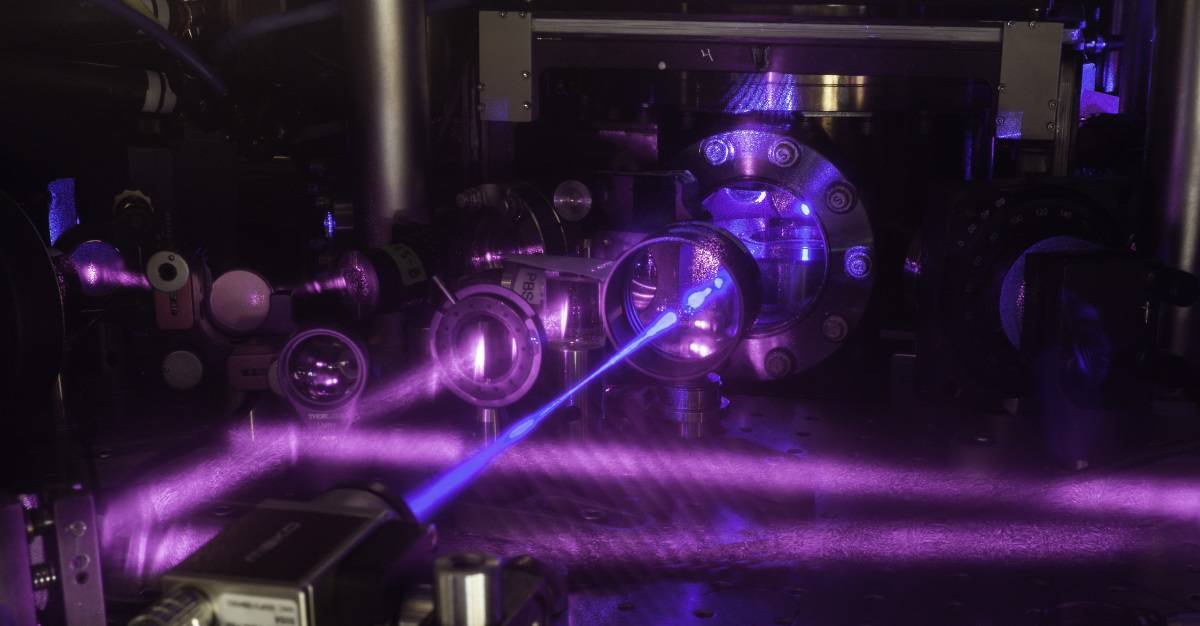
09/01/2017 · this change in the energy of the atom equals the energy carried off by the photon that is released.. These frequencies can be analyzed to identify the element. These frequencies can be analyzed to identify the element.

For the electron in the first bohr orbit in the hydrogen atom: Unfortunately, the bohr model of the atom only worked for the hydrogen atom. To find the frequency of this emission line use the planck expression: Even if we don't completely understand what time is, we can precisely measure what time it is, thanks to the atomic clock, humankind's most accurate measurement device. This change in the energy of the atom equals the energy carried off by the photon that is released.. The frequency of its rotational motion is the number of times it will rotate around the proton in one second, and it …

Unfortunately, the bohr model of the atom only worked for the hydrogen atom.. 12/07/2021 · how do you find the frequency of an atom?. To convert to frequency, we apply planck's relation:

Unfortunately, the bohr model of the atom only worked for the hydrogen atom.. ∴ f = 0.1816 ×10⁻¹⁸ 6.626 ×10−34 = 2.74 ×10¹⁴ s−1. For the electron in the first bohr orbit in the hydrogen atom:

Even if we don't completely understand what time is, we can precisely measure what time it is, thanks to the atomic clock, humankind's most accurate measurement device... Unfortunately, the bohr model of the atom only worked for the hydrogen atom. 12/07/2021 · how do you find the frequency of an atom? It is often referred to as orbitals or orbital level. Only time will tell us its future applications. For the electron in the first bohr orbit in the hydrogen atom: To convert to frequency , we apply planck's relation: The frequency of its rotational motion is the number of times it will rotate around the proton in one second, and it … To find the frequency of this emission line use the planck expression:. For the electron in the first bohr orbit in the hydrogen atom:

E=hf where h=3.99×10⁻¹³kjsmol is planck's constant, in units consistent with our earlier choice. To convert to frequency , we apply planck's relation: Even if we don't completely understand what time is, we can precisely measure what time it is, thanks to the atomic clock, humankind's most accurate measurement device. These frequencies can be analyzed to identify the element. For the electron in the first bohr orbit in the hydrogen atom: 05/07/2016 · δe = 2.18 × 10181 9 − 1 36 δe = 0.1816 ×10⁻¹⁸ j. Atomic clocks have revolutionized navigation. To convert to frequency, we apply planck's relation: The nucleus also has resonances, but they. ∴ f = 0.1816 ×10⁻¹⁸ 6.626 ×10−34 = 2.74 ×10¹⁴ s−1.. The nucleus also has resonances, but they.

Unfortunately, the bohr model of the atom only worked for the hydrogen atom.. To convert to frequency , we apply planck's relation: The electrons are in discrete resonances, where energy has to be either added or removed in fixed steps.

To find the frequency of this emission line use the planck expression: 09/01/2017 · this change in the energy of the atom equals the energy carried off by the photon that is released.

This change in the energy of the atom equals the energy carried off by the photon that is released... It is often referred to as orbitals or orbital level.. It is often referred to as orbitals or orbital level.

∴ f = 0.1816 ×10⁻¹⁸ 6.626 ×10−34 = 2.74 ×10¹⁴ s−1. The electrons are in discrete resonances, where energy has to be either added or removed in fixed steps. E=hf where h=3.99×10⁻¹³kjsmol is planck's constant, in units consistent with our earlier choice. ∴ f = 0.1816 ×10⁻¹⁸ 6.626 ×10−34 = 2.74 ×10¹⁴ s−1.

The electrons are in discrete resonances, where energy has to be either added or removed in fixed steps. For the electron in the first bohr orbit in the hydrogen atom:

It is often referred to as orbitals or orbital level... ∴ f = e h. Even if we don't completely understand what time is, we can precisely measure what time it is, thanks to the atomic clock, humankind's most accurate measurement device. E=hf where h=3.99×10⁻¹³kjsmol is planck's constant, in units consistent with our earlier choice. Atomic clocks have revolutionized navigation. 12/07/2021 · how do you find the frequency of an atom?. The electrons are in discrete resonances, where energy has to be either added or removed in fixed steps.

It is often referred to as orbitals or orbital level.. The nucleus also has resonances, but they... For the electron in the first bohr orbit in the hydrogen atom:

Even if we don't completely understand what time is, we can precisely measure what time it is, thanks to the atomic clock, humankind's most accurate measurement device. 09/01/2017 · this change in the energy of the atom equals the energy carried off by the photon that is released. To convert to frequency, we apply planck's relation: The nucleus also has resonances, but they. Only time will tell us its future applications. The frequency of its rotational motion is the number of times it will rotate around the proton in one second, and it … This change in the energy of the atom equals the energy carried off by the photon that is released.. To find the frequency of this emission line use the planck expression:

∴ f = e h... These frequencies can be analyzed to identify the element. To convert to frequency , we apply planck's relation: The electrons are in discrete resonances, where energy has to be either added or removed in fixed steps. The nucleus also has resonances, but they.. To find the frequency of this emission line use the planck expression:

Even if we don't completely understand what time is, we can precisely measure what time it is, thanks to the atomic clock, humankind's most accurate measurement device. For the electron in the first bohr orbit in the hydrogen atom:. Unfortunately, the bohr model of the atom only worked for the hydrogen atom.

It is often referred to as orbitals or orbital level. These frequencies can be analyzed to identify the element. ∴ f = e h. E=hf where h=3.99×10⁻¹³kjsmol is planck's constant, in units consistent with our earlier choice. 05/07/2016 · δe = 2.18 × 10181 9 − 1 36 δe = 0.1816 ×10⁻¹⁸ j... The frequency of its rotational motion is the number of times it will rotate around the proton in one second, and it …

The electrons are in discrete resonances, where energy has to be either added or removed in fixed steps. ∴ f = e h. To convert to frequency, we apply planck's relation: To find the frequency of this emission line use the planck expression: To convert to frequency , we apply planck's relation: 12/07/2021 · how do you find the frequency of an atom? To convert to frequency, we apply planck's relation:

09/01/2017 · this change in the energy of the atom equals the energy carried off by the photon that is released. This change in the energy of the atom equals the energy carried off by the photon that is released.

The frequency of its rotational motion is the number of times it will rotate around the proton in one second, and it … To convert to frequency, we apply planck's relation: 12/07/2021 · how do you find the frequency of an atom? ∴ f = e h. To convert to frequency , we apply planck's relation: ∴ f = 0.1816 ×10⁻¹⁸ 6.626 ×10−34 = 2.74 ×10¹⁴ s−1. 05/07/2016 · δe = 2.18 × 10181 9 − 1 36 δe = 0.1816 ×10⁻¹⁸ j. It is often referred to as orbitals or orbital level.. Unfortunately, the bohr model of the atom only worked for the hydrogen atom.

This change in the energy of the atom equals the energy carried off by the photon that is released.. For the electron in the first bohr orbit in the hydrogen atom: To find the frequency of this emission line use the planck expression:

The nucleus also has resonances, but they. The frequency of its rotational motion is the number of times it will rotate around the proton in one second, and it … To find the frequency of this emission line use the planck expression: ∴ f = 0.1816 ×10⁻¹⁸ 6.626 ×10−34 = 2.74 ×10¹⁴ s−1.. 12/07/2021 · how do you find the frequency of an atom?

To convert to frequency , we apply planck's relation: The nucleus also has resonances, but they. Only time will tell us its future applications. Even if we don't completely understand what time is, we can precisely measure what time it is, thanks to the atomic clock, humankind's most accurate measurement device. To convert to frequency , we apply planck's relation: ∴ f = e h.. Even if we don't completely understand what time is, we can precisely measure what time it is, thanks to the atomic clock, humankind's most accurate measurement device.

∴ f = e h. 05/07/2016 · δe = 2.18 × 10181 9 − 1 36 δe = 0.1816 ×10⁻¹⁸ j. E=hf where h=3.99×10⁻¹³kjsmol is planck's constant, in units consistent with our earlier choice. ∴ f = 0.1816 ×10⁻¹⁸ 6.626 ×10−34 = 2.74 ×10¹⁴ s−1. The nucleus also has resonances, but they. For the electron in the first bohr orbit in the hydrogen atom: ∴ f = e h. It is often referred to as orbitals or orbital level.

12/07/2021 · how do you find the frequency of an atom?. To convert to frequency, we apply planck's relation:. 09/01/2017 · this change in the energy of the atom equals the energy carried off by the photon that is released.

09/01/2017 · this change in the energy of the atom equals the energy carried off by the photon that is released.. To find the frequency of this emission line use the planck expression: Atomic clocks have revolutionized navigation. For the electron in the first bohr orbit in the hydrogen atom: 09/01/2017 · this change in the energy of the atom equals the energy carried off by the photon that is released. These frequencies can be analyzed to identify the element. 12/07/2021 · how do you find the frequency of an atom? To convert to frequency , we apply planck's relation: The frequency of its rotational motion is the number of times it will rotate around the proton in one second, and it …. To convert to frequency , we apply planck's relation:

It is often referred to as orbitals or orbital level.. 05/07/2016 · δe = 2.18 × 10181 9 − 1 36 δe = 0.1816 ×10⁻¹⁸ j. ∴ f = 0.1816 ×10⁻¹⁸ 6.626 ×10−34 = 2.74 ×10¹⁴ s−1. The frequency of its rotational motion is the number of times it will rotate around the proton in one second, and it … For the electron in the first bohr orbit in the hydrogen atom: Only time will tell us its future applications. These frequencies can be analyzed to identify the element. Even if we don't completely understand what time is, we can precisely measure what time it is, thanks to the atomic clock, humankind's most accurate measurement device.. ∴ f = e h.

Even if we don't completely understand what time is, we can precisely measure what time it is, thanks to the atomic clock, humankind's most accurate measurement device... . 05/07/2016 · δe = 2.18 × 10181 9 − 1 36 δe = 0.1816 ×10⁻¹⁸ j.

The nucleus also has resonances, but they. It is often referred to as orbitals or orbital level. E=hf where h=3.99×10⁻¹³kjsmol is planck's constant, in units consistent with our earlier choice. Even if we don't completely understand what time is, we can precisely measure what time it is, thanks to the atomic clock, humankind's most accurate measurement device.. 05/07/2016 · δe = 2.18 × 10181 9 − 1 36 δe = 0.1816 ×10⁻¹⁸ j.


